// Google Adsense

Thursday, April 2, 2020

COVID-19 vaccine candidate shows promise

(c) futurism.com
University of Pittsburgh School of Medicine scientists have announced a potential vaccine against SARS-CoV-2, the new coronavirus causing the COVID-19 pandemic. When tested in mice, the vaccine, delivered through a fingertip-sized patch, produces antibodies specific to SARS-CoV-2 at quantities thought to be sufficient for neutralizing the virus.

Friday, November 30, 2018

Is being a night owl bad for your health?

from Amazon.com
Night owls may have a higher risk of suffering from heart disease and type 2 diabetes than early risers.

In the first ever international review of studies analyzing whether being an early riser or a night owl can influence your health, researchers have uncovered a growing body of evidence indicating an increased risk of ill health in people with an evening preference as they have more erratic eating patterns and consume more unhealthy foods.

Friday, September 28, 2018

Color-Changing Sensor Detects Signs of Eye Damage in Tears
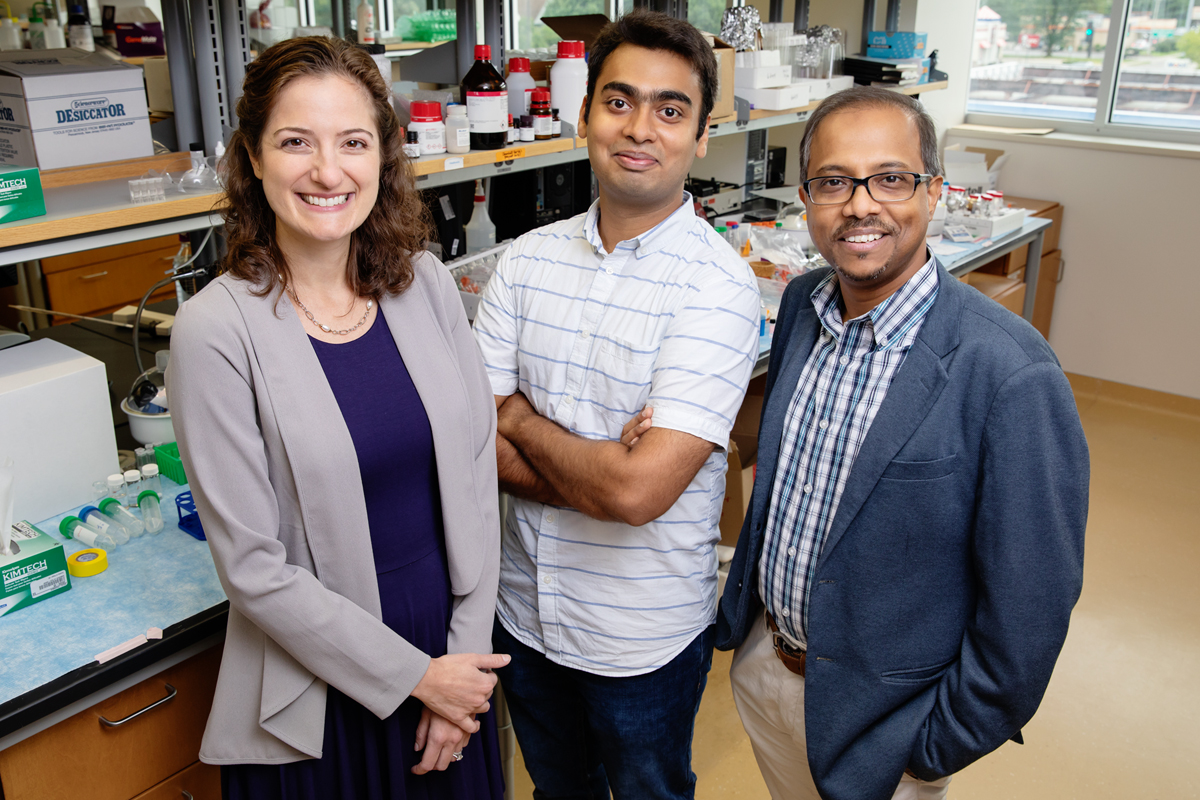
(c) UIUC
A new point-of-care rapid-sensing device can detect a key marker of eye injury in minutes – a time frame crucial to treating eye trauma.

Researchers develop sugar-powered sensor to detect and prevent disease
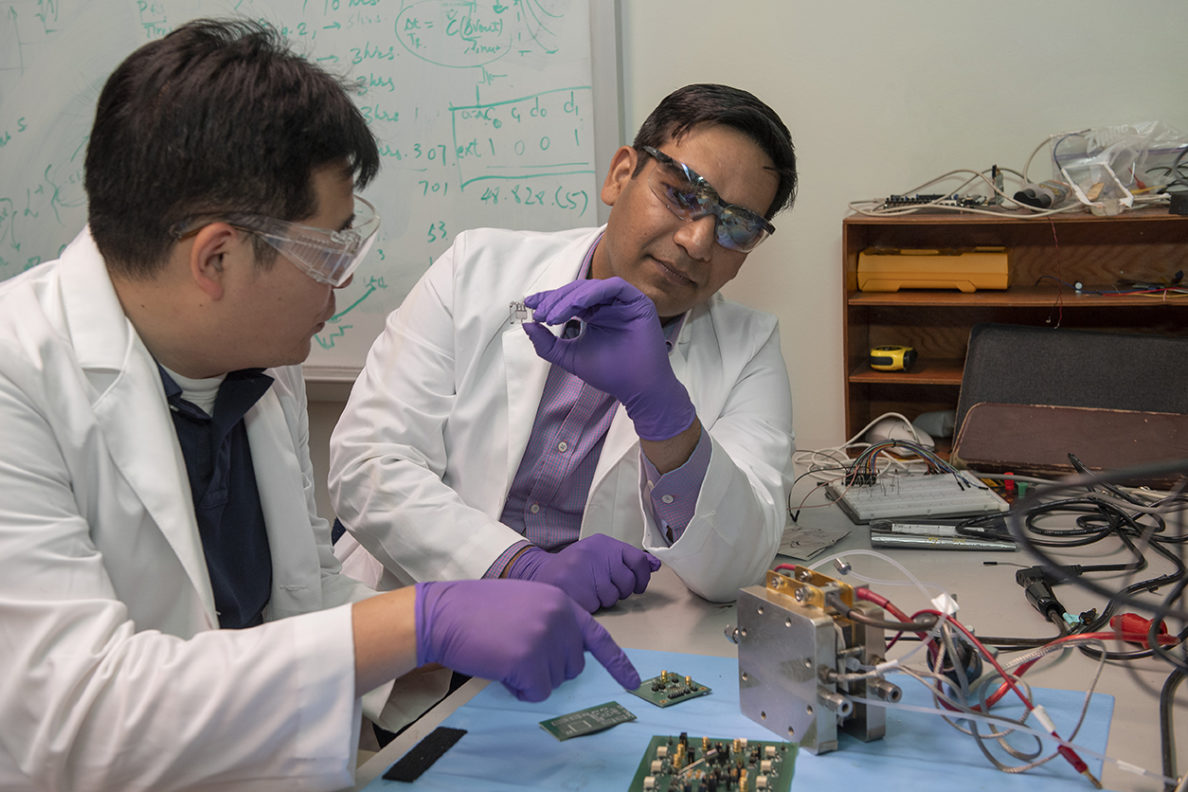
(c) WSU
Researchers at Washington State University have developed an implantable, biofuel-powered sensor that runs on sugar and can monitor a body’s biological signals to detect, prevent and diagnose diseases.

Wednesday, May 30, 2018

FDA approves HumanOptics AG's CustomFlex Artificial iris

(c) OphthalmologyWeb
The U.S. Food and Drug Administration today approved the first stand-alone prosthetic iris in the United States, a surgically implanted device to treat adults and children whose iris (the colored part of the eye around the pupil) is completely missing or damaged due to a congenital condition called aniridia or other damage to the eye.

Wednesday, March 7, 2018

FDA grants authorization to 23andMe for direct-to-consumer genetic test for cancer risk

(c) 23andMe
23andMe, Inc. has received the first-ever FDA authorization for a direct-to-consumer genetic test for cancer risk. The authorization allows the company to provide customers, without a prescription, information on three genetic variants found on the BRCA1 and BRCA2 genes known to be associated with higher risk for breast, ovarian and prostate cancer.

Friday, March 2, 2018

Diabetes may be a group of five different diseases

(c) CDC
A new analysis published in The Lancet Diabetes and Endocrinology indicates researchers were able to distinguish 5 new subgroups of patients with adult-onset diabetes, representing a first step toward precision medicine for the roughly 415 million patients with the chronic condition.

Friday, January 5, 2018

Ohr Pharmaceuticals' MAKO study utilizing Squalamine and Lucentis does not meet primary endpoint

(c) AAO
Ohr Pharmaceutical, Inc. has reported topline data from the MAKO study that did not meet its primary efficacy endpoint. The study evaluated efficacy and safety of topically administered squalamine in combination with monthly Lucentis® injections for the treatment of wet age-related macular degeneration. The primary efficacy endpoint was the mean visual acuity gain at nine months, using a mixed-effects model for repeated measures (MMRM) analysis.

Thursday, January 4, 2018

Removable Drug Delivery Implant based on a Spider's Web to control Type 1 Diabetes
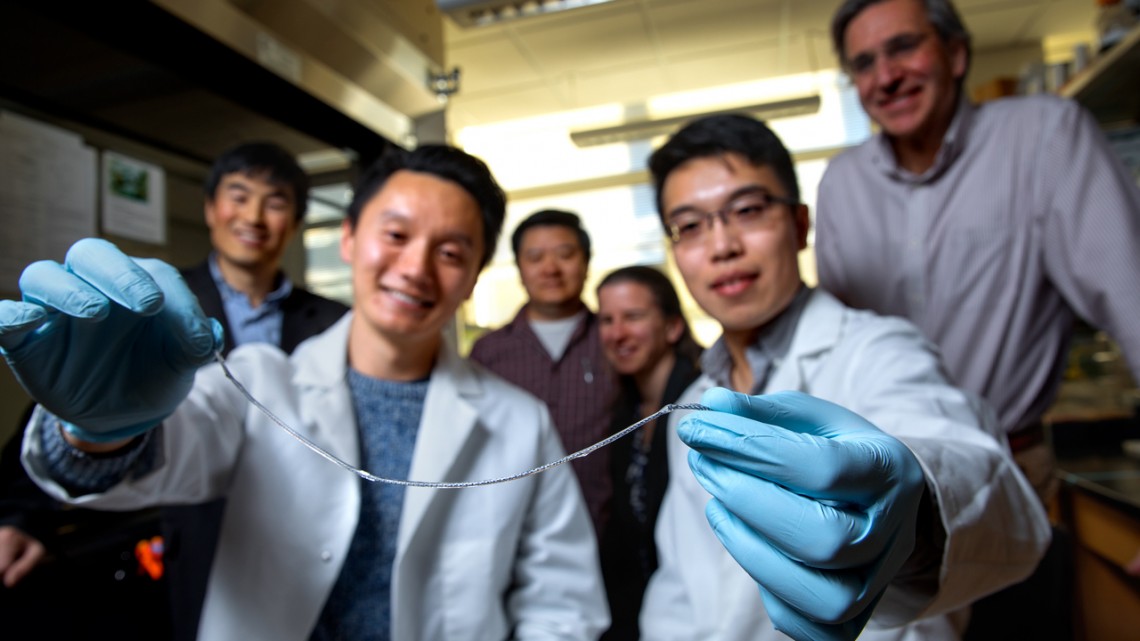
(c) Cornell Univ
For the more than 1 million Americans who live with type 1 diabetes, daily insulin injections are literally a matter of life and death. And while there is no cure, a Cornell-led research team has developed a device that could revolutionize management of the disease.

Wednesday, November 15, 2017

Doctors for the first time edit genome in a living human patient

(c) AP Photo/Eric Risberg
For the first time ever, doctors have edited the genome of a living human patient. A 44-year-old man received the treatment for Hunter's syndrome at a hospital in Oakland, California on November 13.

FDA approves the first digital pill that tracks compliance

Source: Proteus Digital Health
The Food and Drug Administration has approved the first drug in the U.S. with a digital ingestion tracking system. Abilify MyCite (aripiprazole tablets with sensor) has an ingestible sensor embedded in the pill that records that the medication was taken. The product is approved for the treatment of schizophrenia, acute treatment of manic and mixed episodes associated with bipolar I disorder and for use as an add-on treatment for depression in adults.
 

Tuesday, November 14, 2017

Studies show stem cell-based treatment safe in macular degeneration
Results from two early clinical trials show that it may be possible to use human embryonic stem cells as treatment for the dry form of macular degeneration, according to presentations at the American Academy of Ophthalmology Annual Meeting 2017 in New Orleans, LA. Stem cells injected into the eye appear to have replaced the missing cells damaged by the disease, with no serious side effects.

Saturday, November 4, 2017

Does performing/undergoing surgery in the afternoon reduce the risks?

Circadian clock
(c) Genetic Literacy Project

A new study suggests patients undergoing open heart surgery in the afternoon have a lower risk of potentially fatal complications than those undergoing operations in the morning. The study found that events including heart attacks and heart failure were less common among those who had undergone a valve replacement operation in the afternoon. The finding appears to be linked to the ability of the heart tissue to recover after being starved of blood supply during surgery – an effect the researchers say is influenced by the cells’ biological or “circadian” clock.

Friday, November 3, 2017

The first dual-action Glaucoma drug, Vyzulta, approved by FDA

(c) AAO
Food and Drug Administration (FDA) has approved Vyzulta™ (latanoprostene bunod ophthalmic solution, 0.024%), which is the first prostaglandin analog with one of its metabolites being nitric oxide (NO), indicated for the reduction of intraocular pressure (IOP) in patients with open-angle glaucoma or ocular hypertension. Following topical administration, Vyzulta, a once daily monotherapy with a dual mechanism of action, works by metabolizing into two moieties, latanoprost acid, which primarily works within the uveoscleral pathway to increase aqueous humor outflow, and butanediol mononitrate, which releases NO to increase outflow through the trabecular meshwork and Schlemm's canal.

Orion, the Cortical Visual Prosthesis System, gets full FDA approval

(c) medgadget.com
The FDA has granted full approval to Second Sight Medical Products (SSMP) to begin the feasibility study for the Orion-ITM Cortical Visual Prosthesis System. The approval allows two US sites, the University of California at Los Angeles (UCLA) and Baylor College of Medicine in Houston, to enroll up to five total patients. The company’s new Orion I Visual Cortical Prosthesis goes even further by bypassing the optic nerve, along with the entire visual system, and stimulates the brain’s visual cortex directly. This would allow even people who lack any functionality within their eyes to be able to see.

Tuesday, October 31, 2017

Converting to Eylea from Avastin may benefit Patients with Diabetic Macular Edema

(c) British Journal of Ophthalmology
A study from Portugal, published in Graefe's Archive for Clinical and Experimental Ophthalmology, finds changing from bevacizumab (avastin) to aflibercept (eylea) for persistent diabetic macular edema resulted in functional and anatomical improvements. Central macular thickness previous to starting aflibercept was found to be a predictor of anatomical changes after aflibercept.

Monday, October 30, 2017

Beware: Using colored contact lenses on Halloween may lead to blindness!

Whether you’re a ghost or zombie, vampire or witch, poor costume choices—including decorative (colored) contact lenses and flammable costumes—and face paint allergies can cause injuries that haunt you long after Halloween. Also remember what eating lots of sweet candy can do to your or your children's body.

It always pays to be aware and careful. Happy Halloween!

Thursday, October 26, 2017

DNA & RNA editing - the future of disease management

Scientists at Harvard University and the Broad Institute of MIT and Harvard have developed a new class of DNA base editor that can alter genomic structure to help repair the type of mutations that account for half of human disease-associated point mutations. These mutations are associated with disorders ranging from genetic blindness to sickle-cell anemia to metabolic disorders to cystic fibrosis.

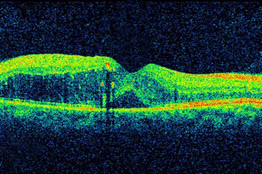
Suprachoroidal injection - Clearside's approach to treating Diabetic Macular Edema
(c) NEI
Clearside Biomedical, Inc. has completed patient enrollment in the Phase 2 clinical trial (referred to as "TYBEE") of CLS-TA, the company's proprietary suspension formulation of the corticosteroid triamcinolone acetonide (TA) for suprachoroidal administration, used in combination with intravitreally administered EyleaTM (aflibercept) for treatment of diabetic macular edema (DME).  Patient follow-up in the TYBEE trial is 6 months.


Wednesday, October 25, 2017

Leber Hereditary Optic Neuropathy - The Gene Therapy race to treatment

GenSight Biologics, which is in advanced stages of clinical development of gene therapy for Leber Hereditary Optic Neuropathy, has a new Chief Medical Officer. Barrett Katz, M.D., M.B.A., who until recently was the Professor of Ophthalmology, Neurology and Neurosurgery at the Montefiore Medical Center and the Albert Einstein College of Medicine in New York. Dr. Katz has worked in both academic medicine and the industry as a neuro-ophthalmologist, working as CEO of ophthalmic biotech Danube Pharmaceuticals, as well as CMO of Fovea Pharmaceuticals and VP of medical affairs and strategy at Eyetech.